

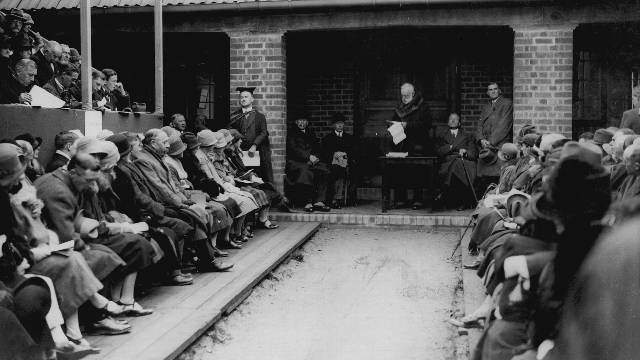
 The National Institute of Poultry Husbandry at 100 - rediscovering an eye witness account
To mark the Centenary of the opening of National Institute of Poultry Husbandry at Harper Adams, we’re sharing a contemporary acc …
Posted 3 November
Using our global connections to turn compassion into action
23 June 2023

This week – June 19-25 – is Refugee Week, with the week’s 25th anniversary being marked with a theme of compassion.
In this blog, Harper Adams University’s Chief Global Impact Officer Ian Rowley reflects on what the week means for academia generally – and for Harper Adams in particular.
We live in an interconnected world.
Harper Adams is a specialist institution, and our research and partnerships are testament to the impact these global connections can have.
These connections can be seen in the work of our academics, briefing the Government on food security issues and their implications for the world, or through the links we are building as part of Universities UK International’s #TwinforHope campaign.
Under this campaign, we have partnered with the ?Odessa National University of Technology?(ONUT) on academic programmes, research, and student work – and we have also welcomed Ukrainian students to our campus to study.
As we recognise our University has a growing global role, we must acknowledge that we have a global responsibility, too.
With the 25th annual Refugee Week running until Sunday, it is worth reflecting on how these different strands of a globally connected world can affect an academic institution – and how, sadly, the work of academics globally can be, and is being, targeted.
In March of this year, shortly after taking up my post as Chief Global Impact Officer, I also took up a role as Harper Adams University’s contact point for Cara – the Council for At Risk Academics.
Cara was set up in the 1930s as the Academic Assistance Council, as Nazi Germany began expelling academics from German institutions. Its work was vital, and saved lives – and potential – through its work to rescue and support academics at risk for their racial or political views, beliefs and research.
This work saved many lives – with Nobel Prize winners and Fellows of both the Royal Society and the British Academy among their number.
Yet despite the end of the Second World War, the need for the Council’s successor, the Society for the Protection of Science and Learning, remained as clear as ever.
Nearly a century on, that need remains – and requires our support. Programmes run in Iraq and Zimbabwe, in Afghanistan, in Syria, and in Ukraine.
In partnership with universities such as Harper Adams, Cara offers hundreds of academics help each year – with practical, financial and logistical assistance all vital for those academics it serves.
This year’s Refugee Week theme is Compassion – and it’s worth taking a moment to stop and reflect upon how valuable practical support can be when we turn compassion into action.
Related Posts
The National Institute of Poultry Husbandry at 100 - rediscovering an eye witness account
To mark the Centenary of the opening of National Institute of Poultry Husbandry at Harper Adams, we’re sharing a contemporary acc …
Posted 3 November
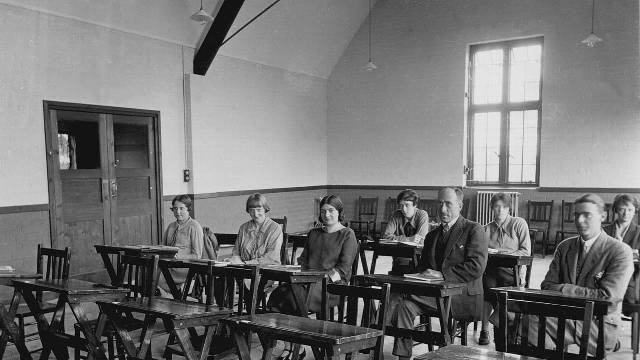 'More than 100 years of expertise' - a brief history of poultry at Harper Adams
Dr Stephen Mansbridge is Reader in Animal Science and Bioinformatics at Harper Adams University as well as Director of the Animal Science Re …
Posted 3 November
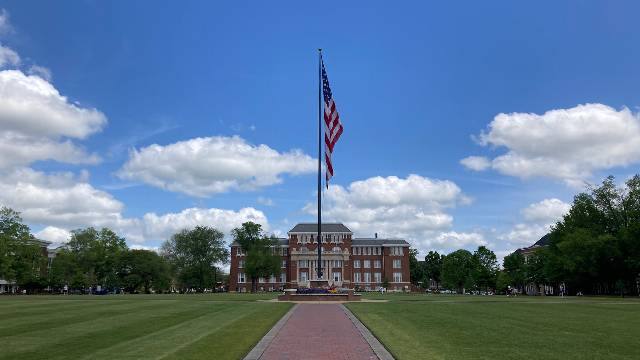 Agricultural Autonomy Institute joins Harper Adams University's 125th anniversary celebrations
A leading American expert in agricultural autonomy has paid tribute to Harper Adams University as it marks its 125th anniversary.Dr Alex Tho …
Posted 22 October
 Sky's the limit: Helen joins MP's fundraising parachute jump
A charity skydive by a Harper Adams University Business Development Consultant has helped raise more than £16,000 for a new cancer cen …
Posted 21 October